
2026: The Year of Frictionless Intelligence
How Consumers, Employees, and Organizations Converge Around Effortless Insight and Anticipatory Value
The Shift Toward Effortless Intelligence
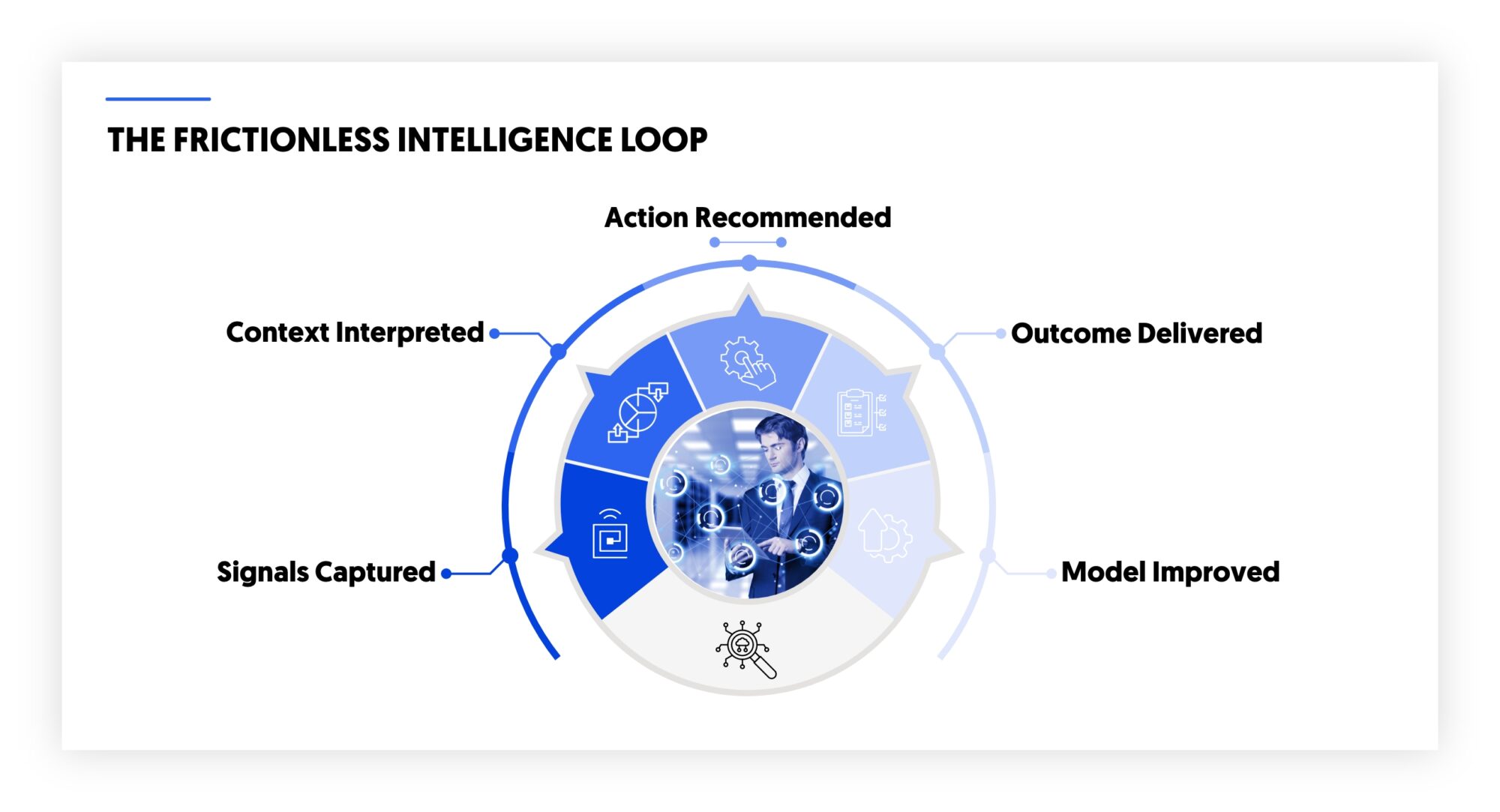
Over the past decade, organizations have invested heavily in data infrastructure, analytics platforms, and AI experimentation. These efforts were necessary, but they also created a new kind of complexity: more dashboards, more metrics, and more interfaces for people to navigate. As a result, both customers and employees have reached a point where the real differentiator is no longer access to information. It is the ability to receive the right intelligence without effort.
This shift defines 2026.
Frictionless intelligence emerges as the organizing principle of high-performing experiences, products, and workplaces. It is the transition from searching for insight to having it surface automatically. It is the evolution from systems that require interpretation to systems that guide action. And it is the moment when AI becomes less visible but far more valuable.
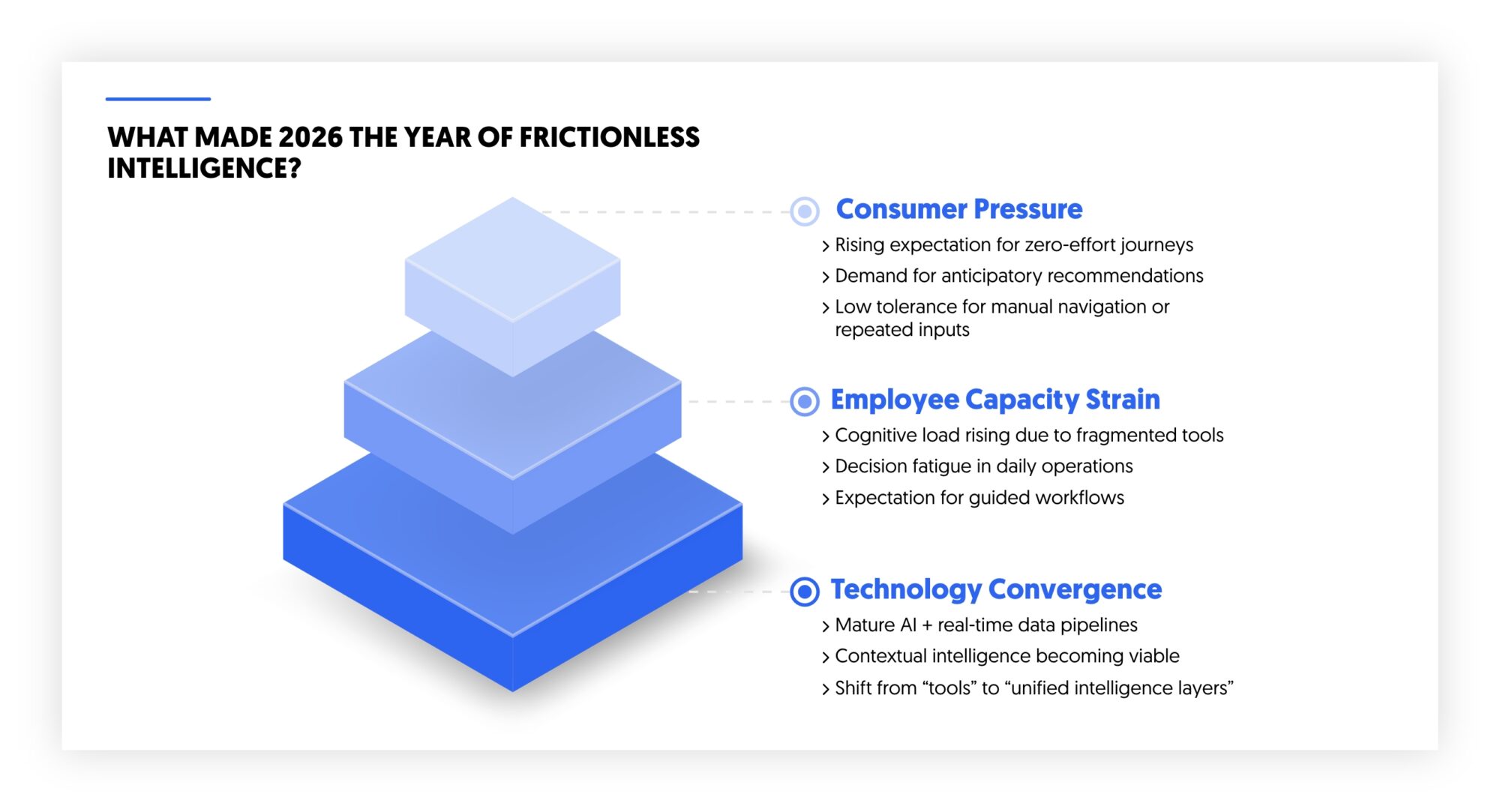
This change did not arrive suddenly. It accelerated as consumers grew comfortable with anticipatory digital behaviors, employees faced increasing cognitive load, and organizations recognized that fragmented technology layers were slowing execution. By 2026, these forces converge around a single expectation: intelligence should be immediate, contextual, and invisible.
The rest of this report explores how this expectation reshapes consumer behavior, employee experience, technology architectures, and organizational operating models and why frictionless intelligence is becoming the defining capability for modern growth.
Consumer Trends: When Effort Becomes the Real Cost
As market saturation increases across industries, the distance between alternatives narrows. Price, product features, and branding matter , but they no longer decide loyalty on their own. Instead, consumers reward brands that reduce effort and predict needs, making frictionless intelligence a central part of everyday decision-making.
Predictive Choice-Making
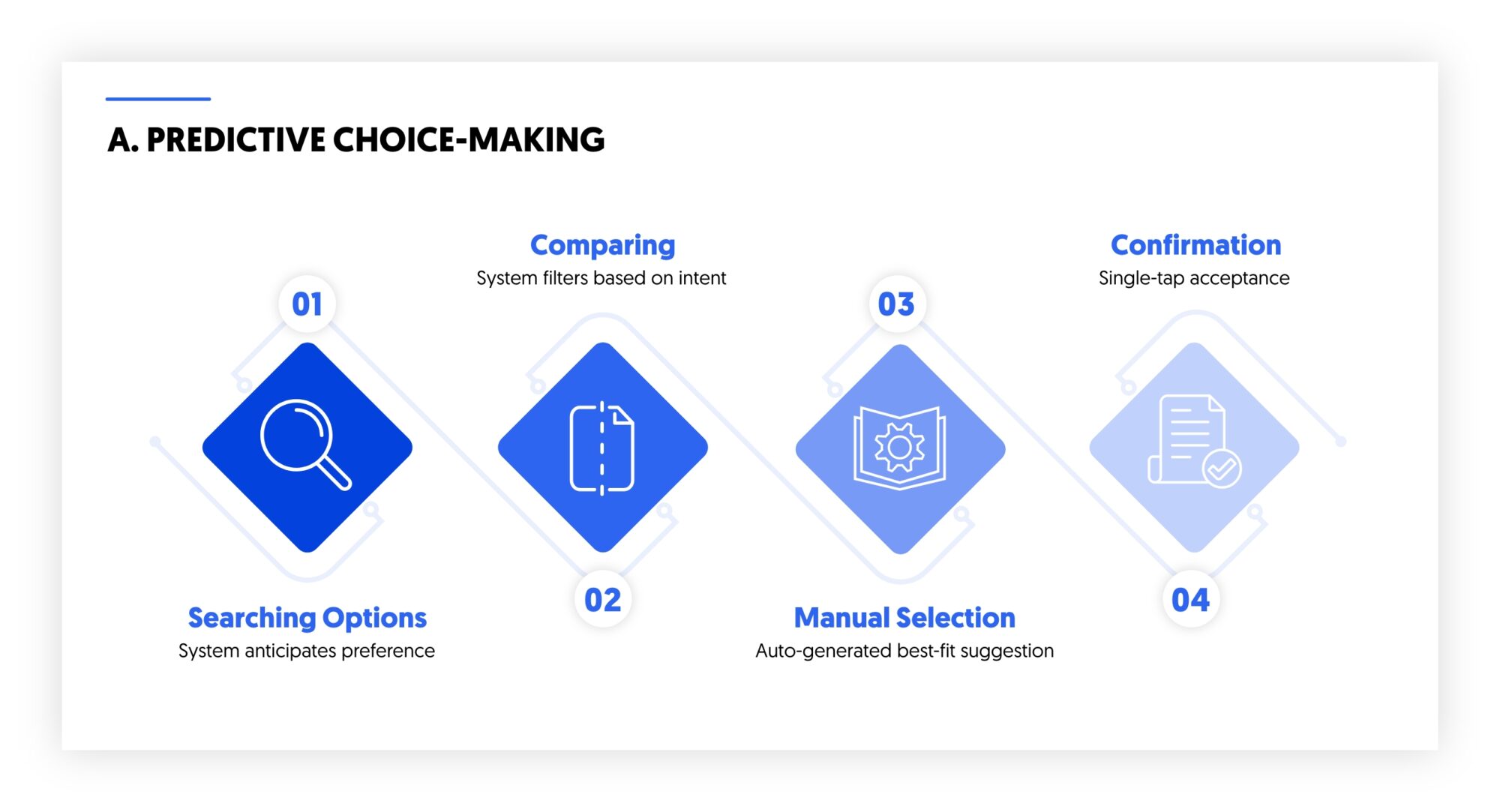
Consumers increasingly expect digital environments to anticipate the next step: the next action, the next product, the next resolution. This expectation is not simply about convenience; it reflects a broader behavioral shift driven by trust in guided experiences. When systems anticipate needs accurately, they reduce cognitive strain and create a sense of momentum. As this becomes normalized, any brand that still requires customers to navigate options manually appears outdated.
Intelligent Convenience
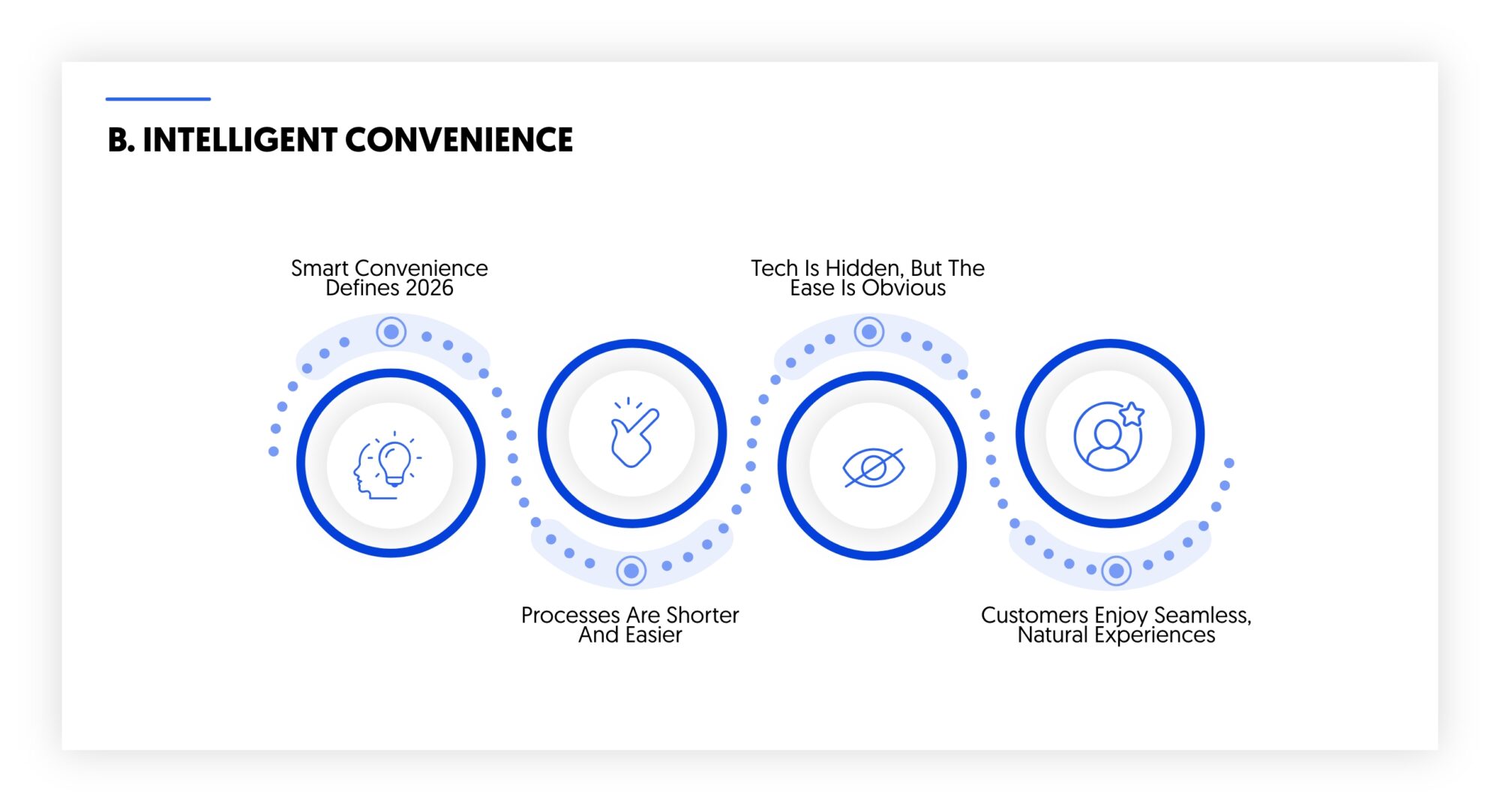
2026 marks the rise of compressed journeys. People expect multi-step processes -from applying for a service to resolving a complaint-to contract into a few guided interactions. The intelligence behind these experiences is invisible, but its presence is unmistakable: customers feel that things “just work,” and that the service is designed around the way they think and behave, not around organizational constraints.
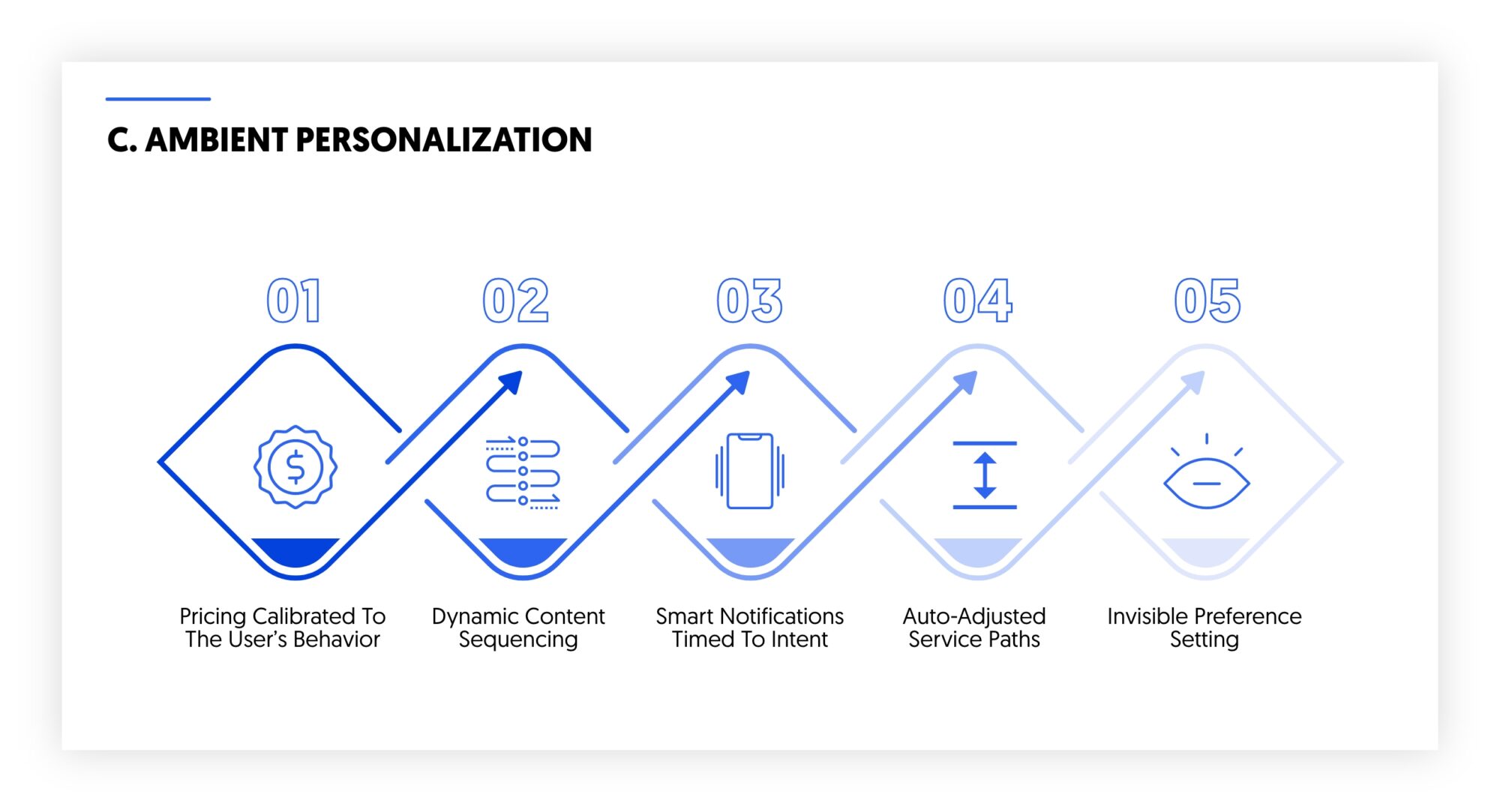
Ambient Personalization
Personalization shifts from overt targeting to silent optimization. Instead of being asked for preferences or directed to customize journeys, consumers expect systems to update themselves based on context, history, and need. When personalization works, it disappears. When it fails, the friction becomes visible and quickly erodes trust.
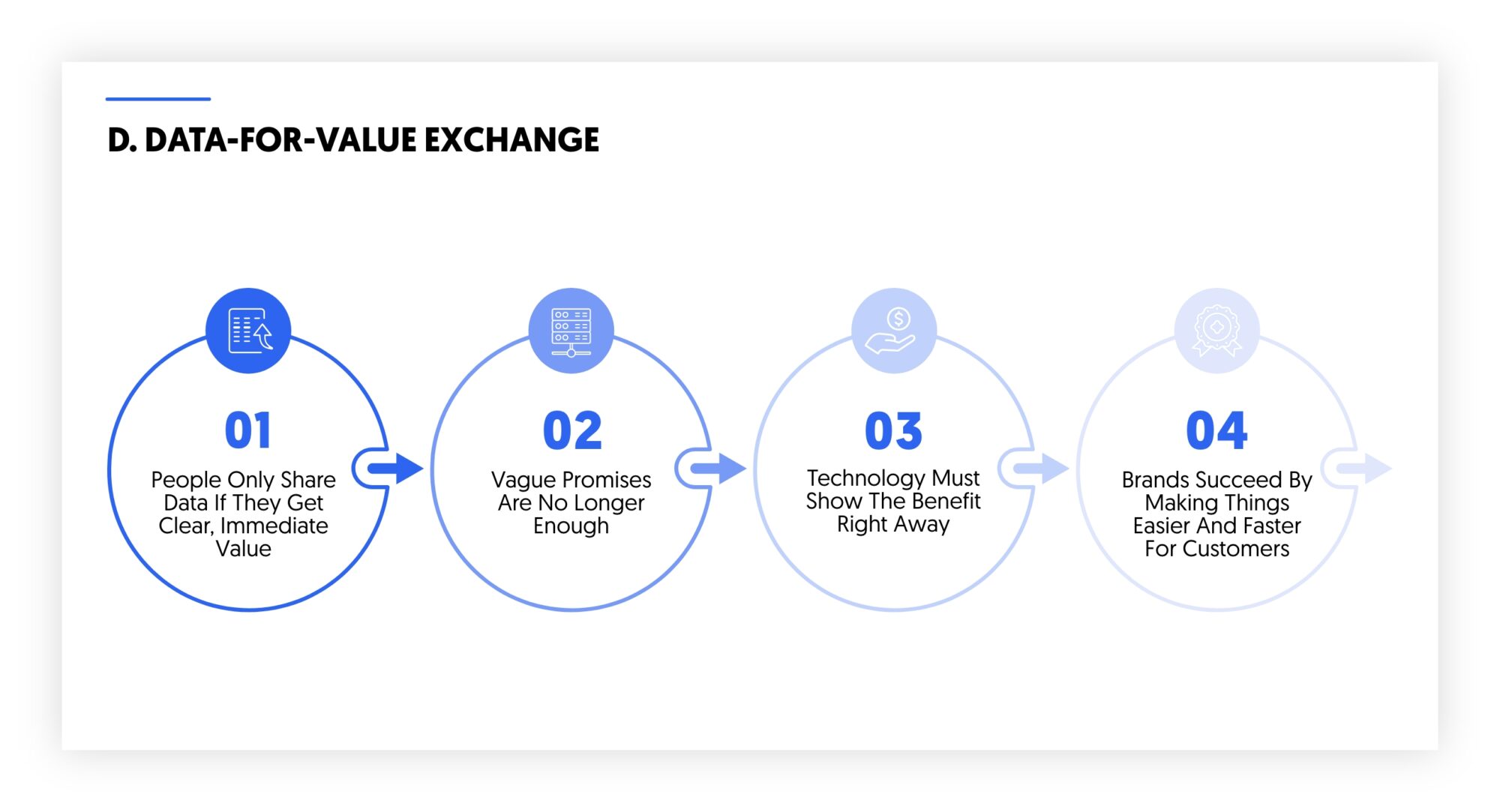
Data-for-Value Exchange
Data sharing becomes a transactional choice. Consumers no longer accept vague promises about “better experiences.” They share data only when the value is immediate, measurable, and clearly tied to the outcome they want. Frictionless intelligence reinforces this by showing the return on data instantly, rather than requiring faith in future benefits.
These trends collectively point to a market where brands are judged by their ability to remove effort at every moment of interaction. The competitive advantage lies less in the breadth of data captured and more in the speed at which actionable intelligence is delivered.
Employee Experience: High-Performance Through Cognitive Ease
As organizations expand their digital ecosystems, employees face the paradox of “too much support.” Tools meant to simplify work often create new layers of effort: additional dashboards to check, more data to interpret, and more decisions to make without context. By 2026, leaders recognize that productivity gaps are not primarily about motivation or skill — they are about cognitive load.
Frictionless intelligence becomes the remedy.
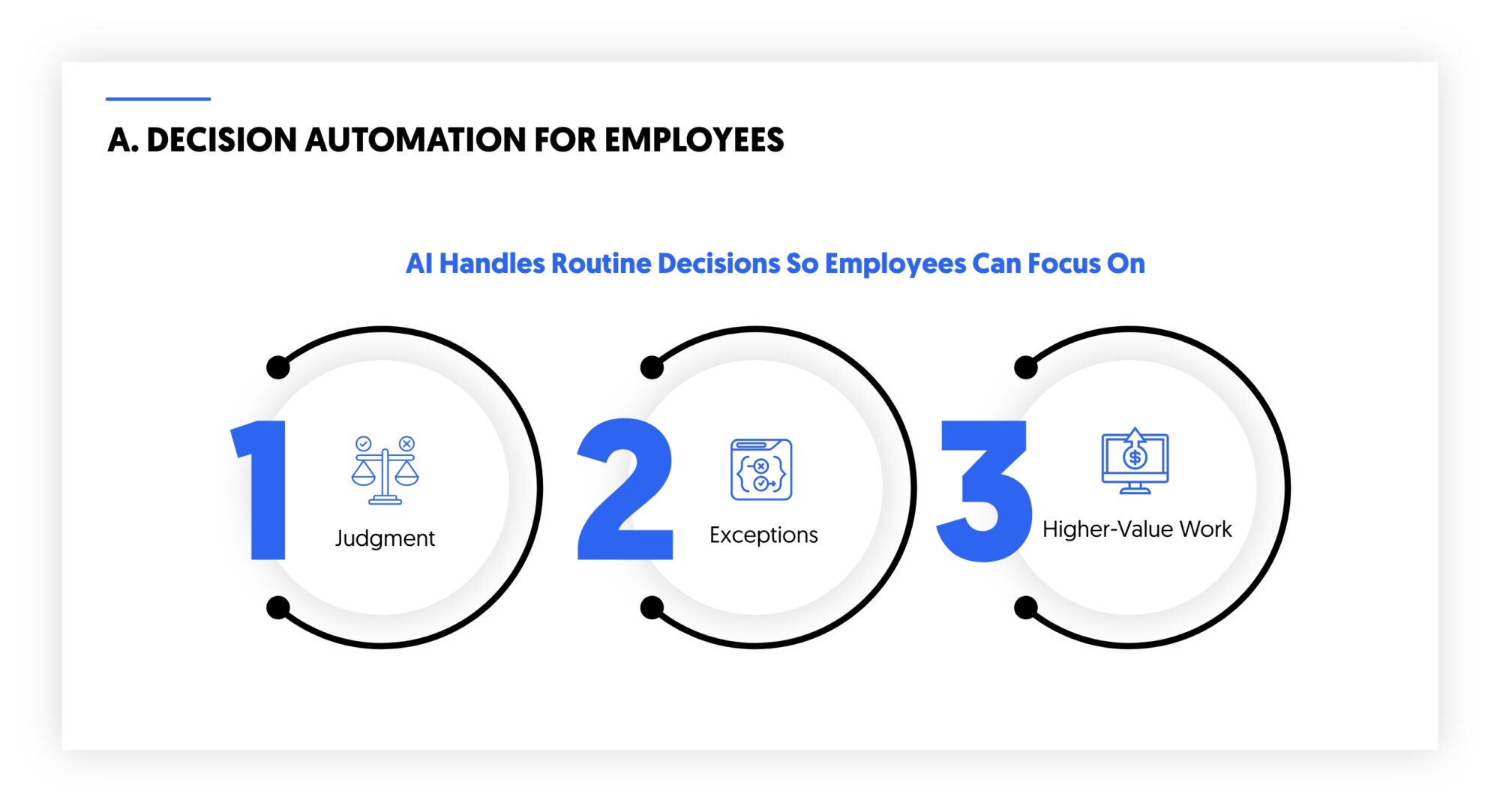
Decision Automation for Employees
Routine decisions increasingly shift to intelligent agents, allowing employees to focus on exceptions, judgment, and higher-value tasks. This does not replace human capability; it amplifies it. When the system handles the predictable, people can invest energy in the meaningful.
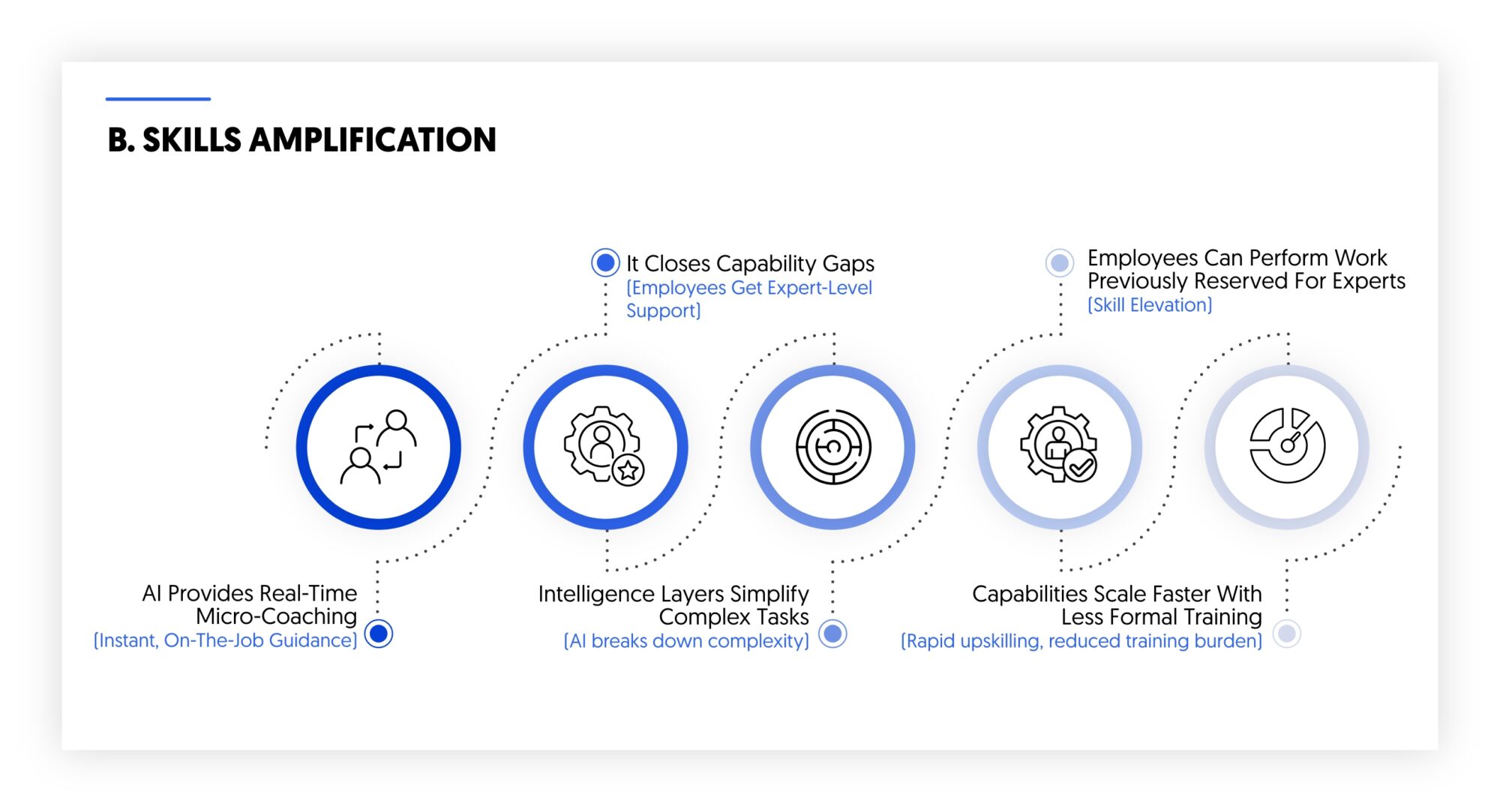
Skills Amplification
AI-driven guidance closes capability gaps by offering real-time micro-coaching. Employees can perform tasks previously reserved for experts because intelligence layers simplify complexity and provide contextual instruction. The result is a workforce that scales capability faster, with less formal training.
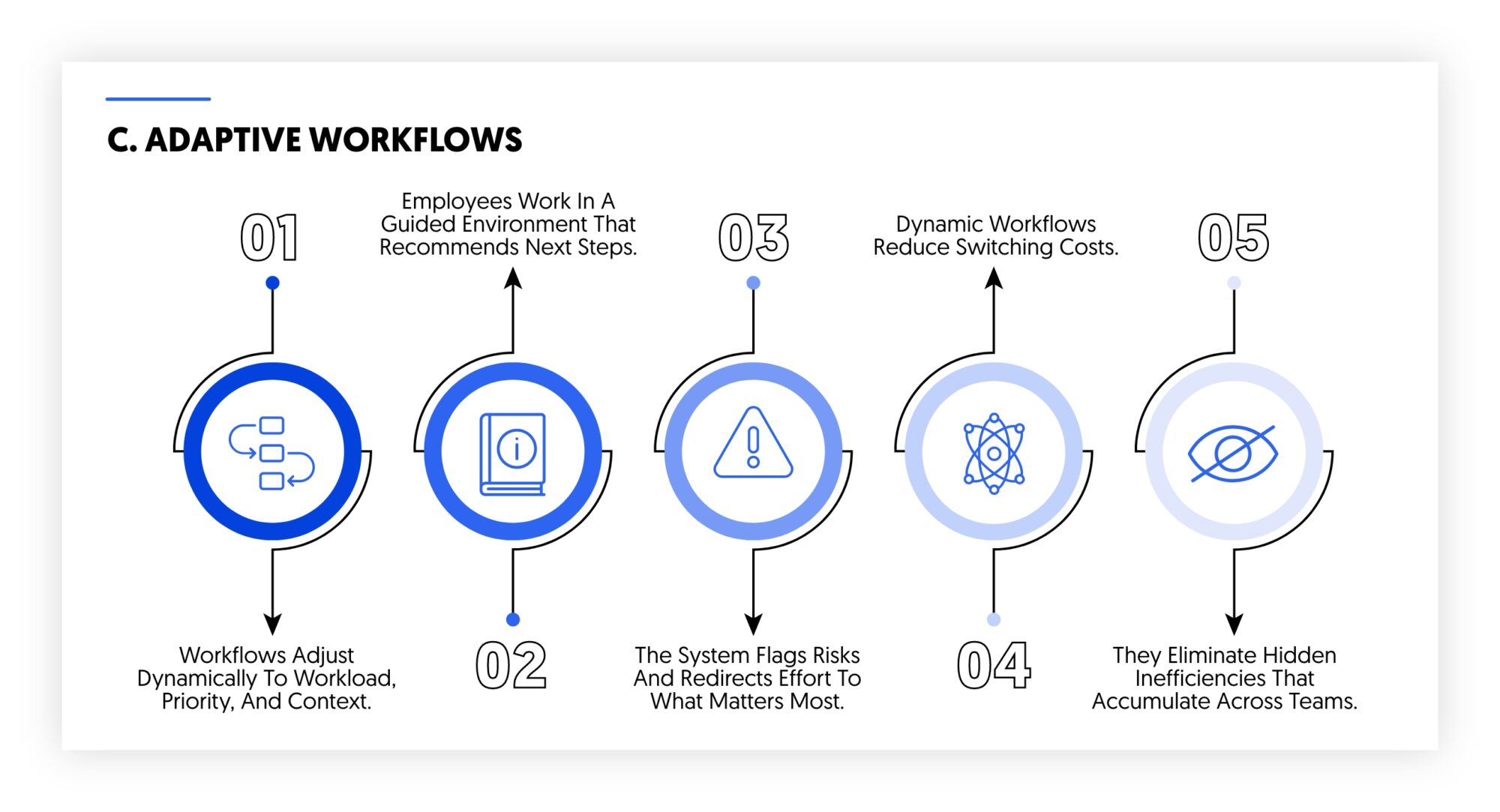
Adaptive Workflows
Workflows adjust dynamically to workload, priority, and context. Instead of static processes, employees experience a guided environment that recommends next steps, flags risks, and redirects effort to where it matters most. This reduces switching costs and eliminates the hidden inefficiencies that accumulate across teams.
A New Productivity Narrative
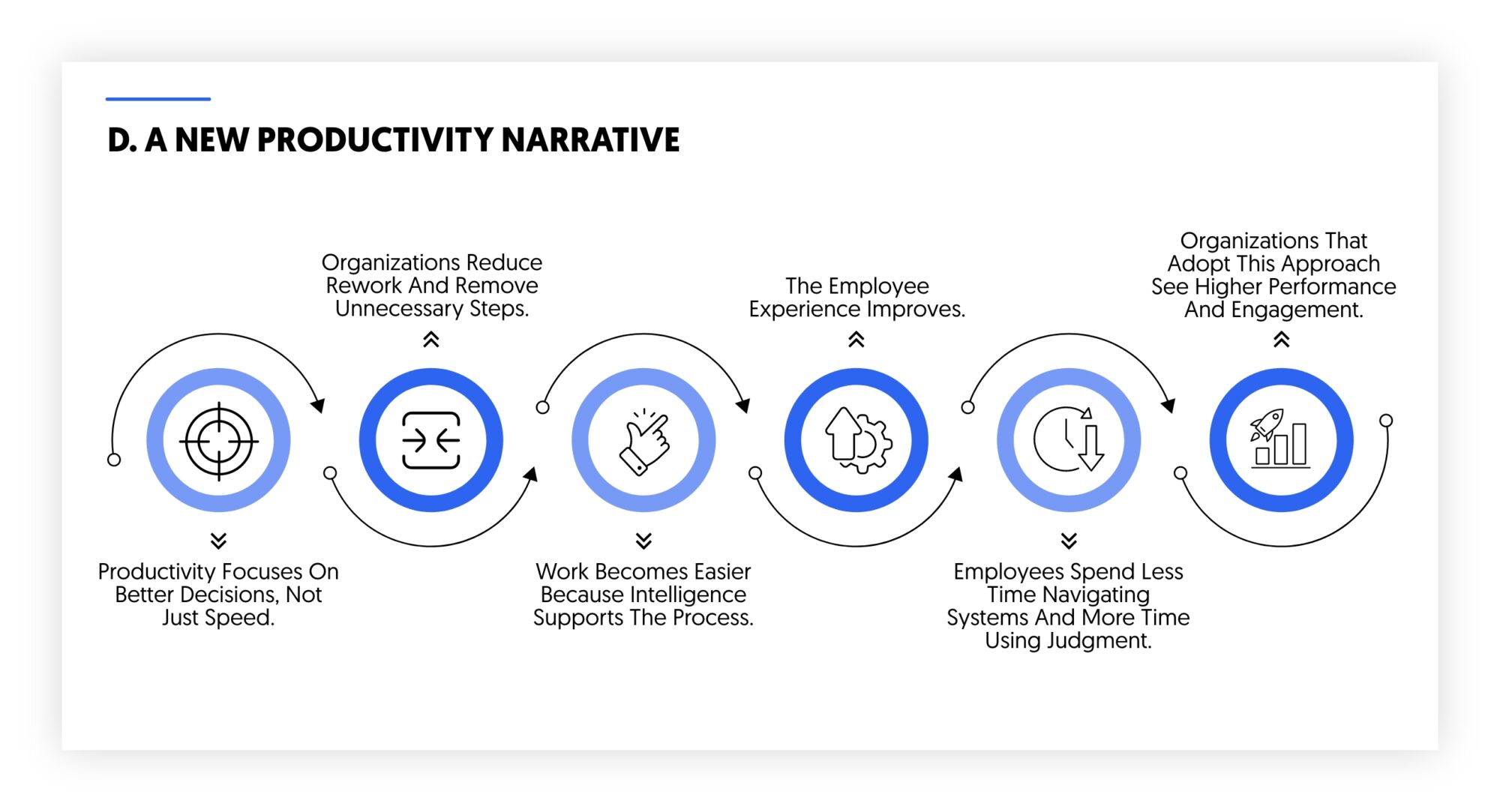
Rather than focusing on speed or output, organizations begin to measure the quality of decisions, the reduction of rework, and the elimination of unnecessary steps. Productivity becomes a function of ease, not effort and intelligence becomes the mechanism that unlocks it.
Together, these shifts redefine the employee experience. Work becomes less about navigating systems and more about applying judgment. The organizations that master this transition achieve both higher performance and greater engagement.
Technology Trends: Building the Intelligence Layer
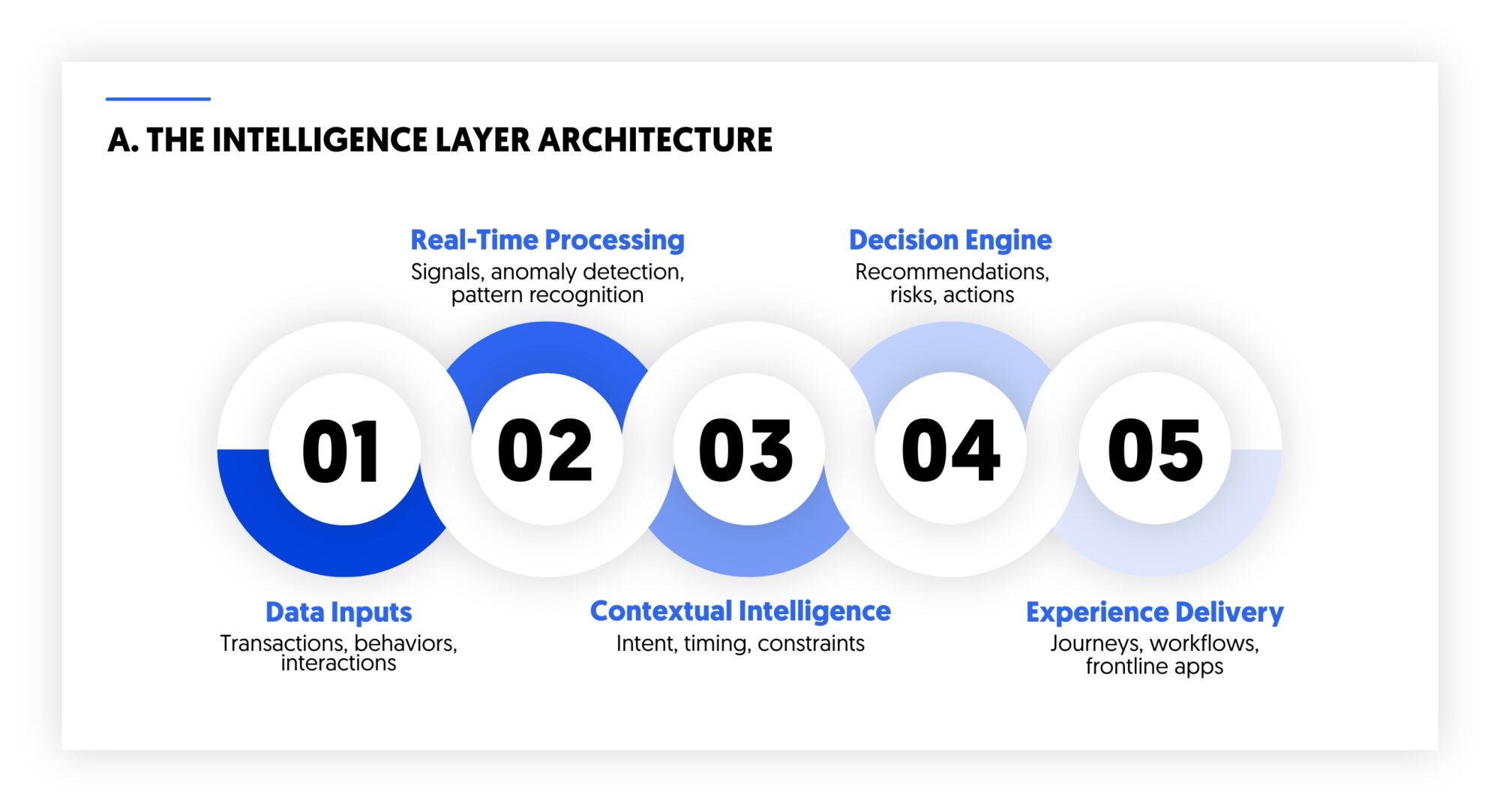
Behind frictionless intelligence lies a structural shift in how technology is designed and deployed. Organizations move away from siloed tools and toward a unified intelligence layer that interprets signals and orchestrates action across systems.
Real-Time Intelligence Engines
These engines operate continuously, reading data from across the enterprise and transforming it into timely interventions. They power everything from guided customer journeys to proactive service recovery, making intelligence a live capability rather than a retrospective analysis.
Contextual AI
AI evolves from tasks such as content generation or query resolution to understanding context: a combination of time, location, intent, history, and constraints. This allows organizations to provide tailored guidance that feels intuitive and relevant, rather than generic.
Edge Intelligence
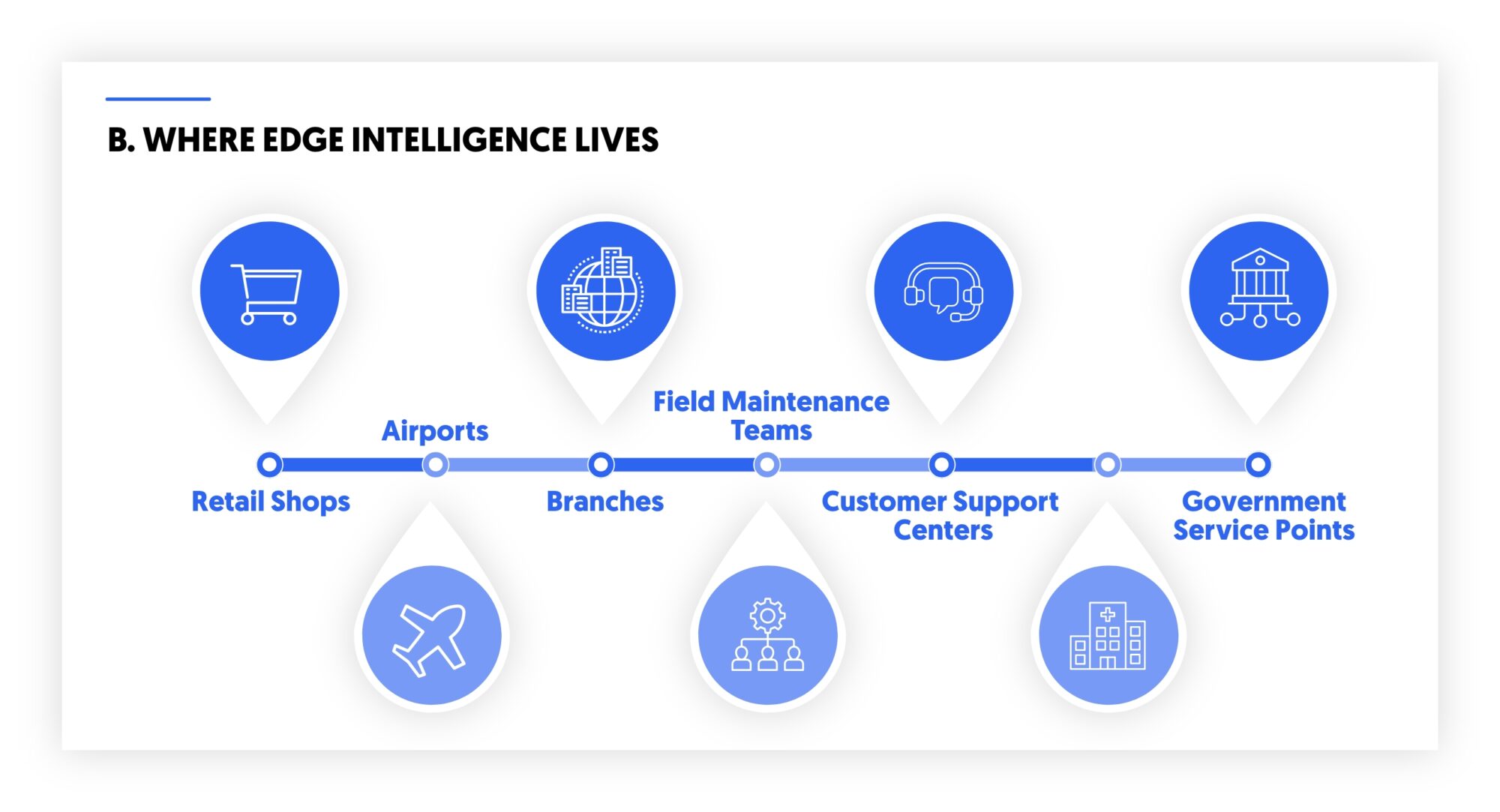
As the pace of decisions accelerates, intelligence moves closer to the frontline. Branches, retail floors, field teams, and service centers receive insights exactly where they are needed, enabling faster, more accurate action without routing through central decision-making.
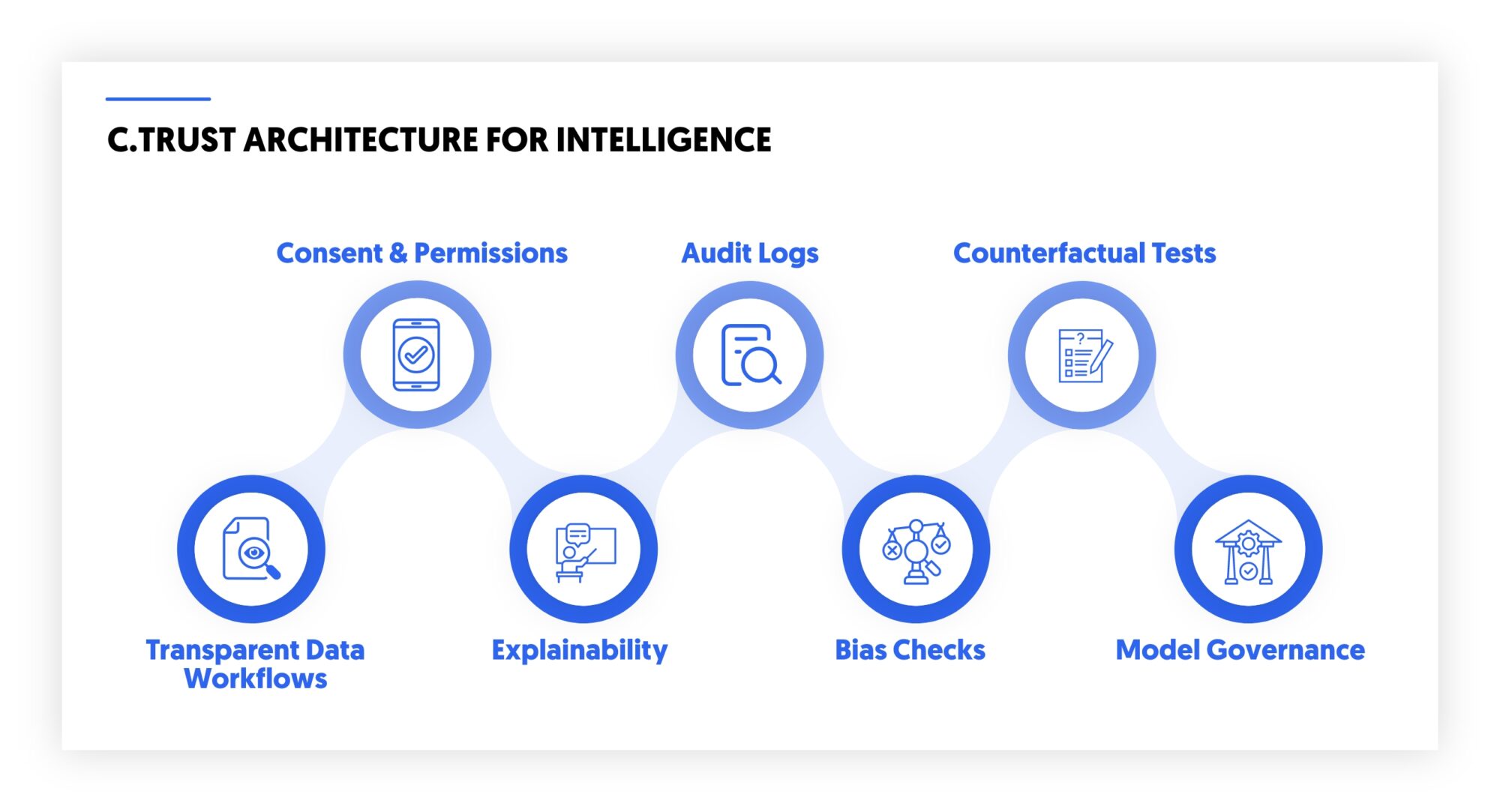
Trust Architecture
With intelligence playing a central role, transparency, auditability, and responsible data use become foundational elements of technology design. Trust becomes a structural requirement for intelligence-driven systems.
These trends collectively redefine the technology stack. Instead of building isolated capabilities, organizations design connected environments that deliver intelligence as a seamless, continuous layer.
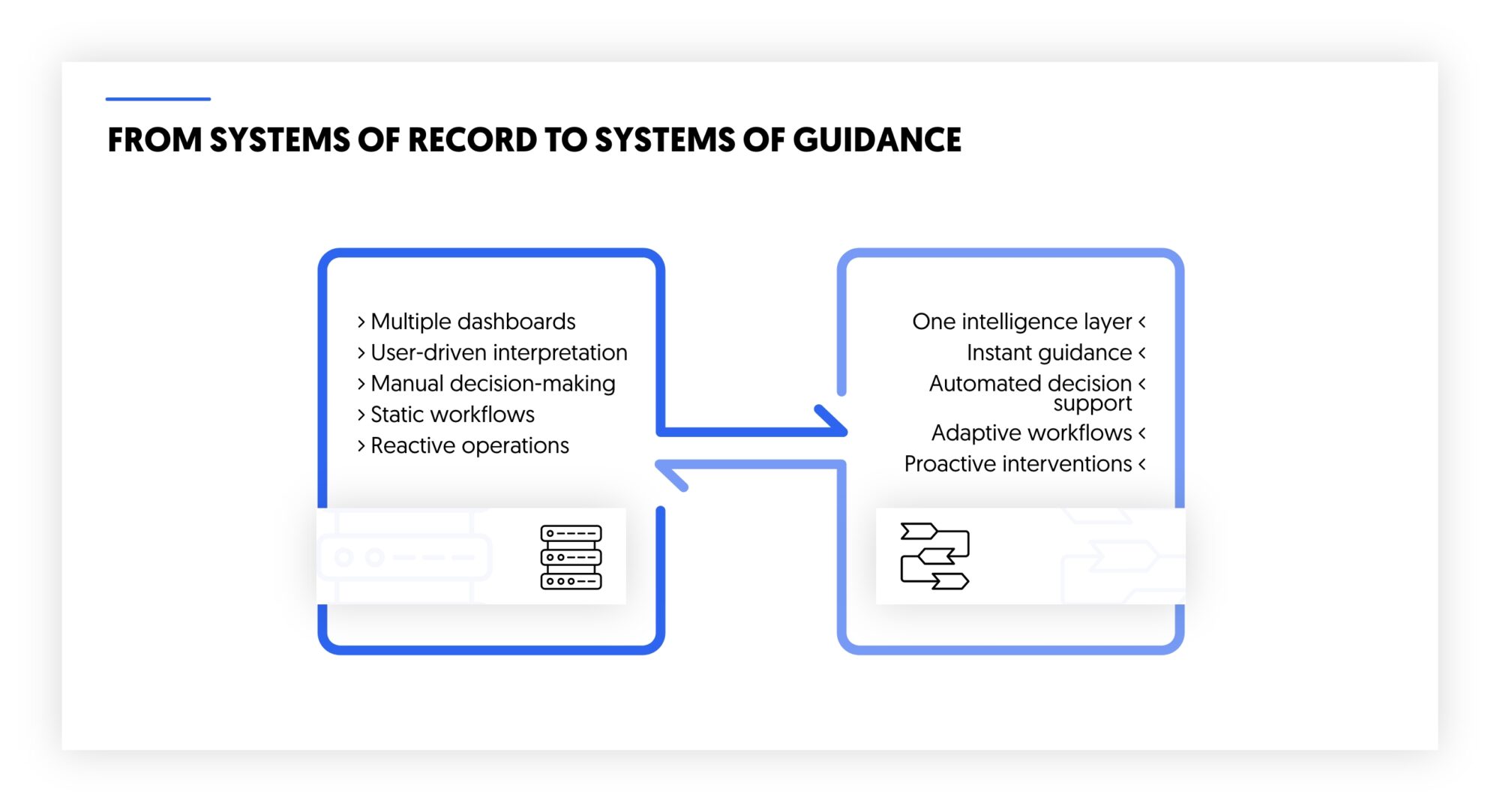
The Organization of 2026: From Systems of Record to Systems of Guidance
As these consumer, employee, and technology trends converge, a new organizational model emerges. Winning organizations are no longer defined by the amount of data they hold or the number of tools in their stack. They are defined by how well they guide action.
A frictionless organization is characterized by:
- Fewer dashboards, more direction.
- Fewer steps, more automatic progression.
- Fewer manual interpretations, more ready-to-use insights.
- Fewer silos, more unified intelligence.
This shift transforms how organizations operate, plan, and create value. Instead of reacting to data, they anticipate outcomes. Instead of relying on experience alone, they blend human intuition with continuous intelligence. And instead of asking customers and employees to adapt to systems, they design systems that adapt to them.
What Leaders Need to Prioritize Now
Achieving frictionless intelligence requires decisive action across strategy, design, and execution. Leaders should focus on five priorities:
- Build intelligence as a layer, not a tool.
Integrate guidance into processes rather than offering it as an optional resource. - Reduce cognitive load.
Redesign workflows and interfaces to remove the burden of interpretation. - Focus on the data that drives action.
Fewer, smarter datasets outperform large collections with low operational value. - Re-engineer journeys around effort elimination.
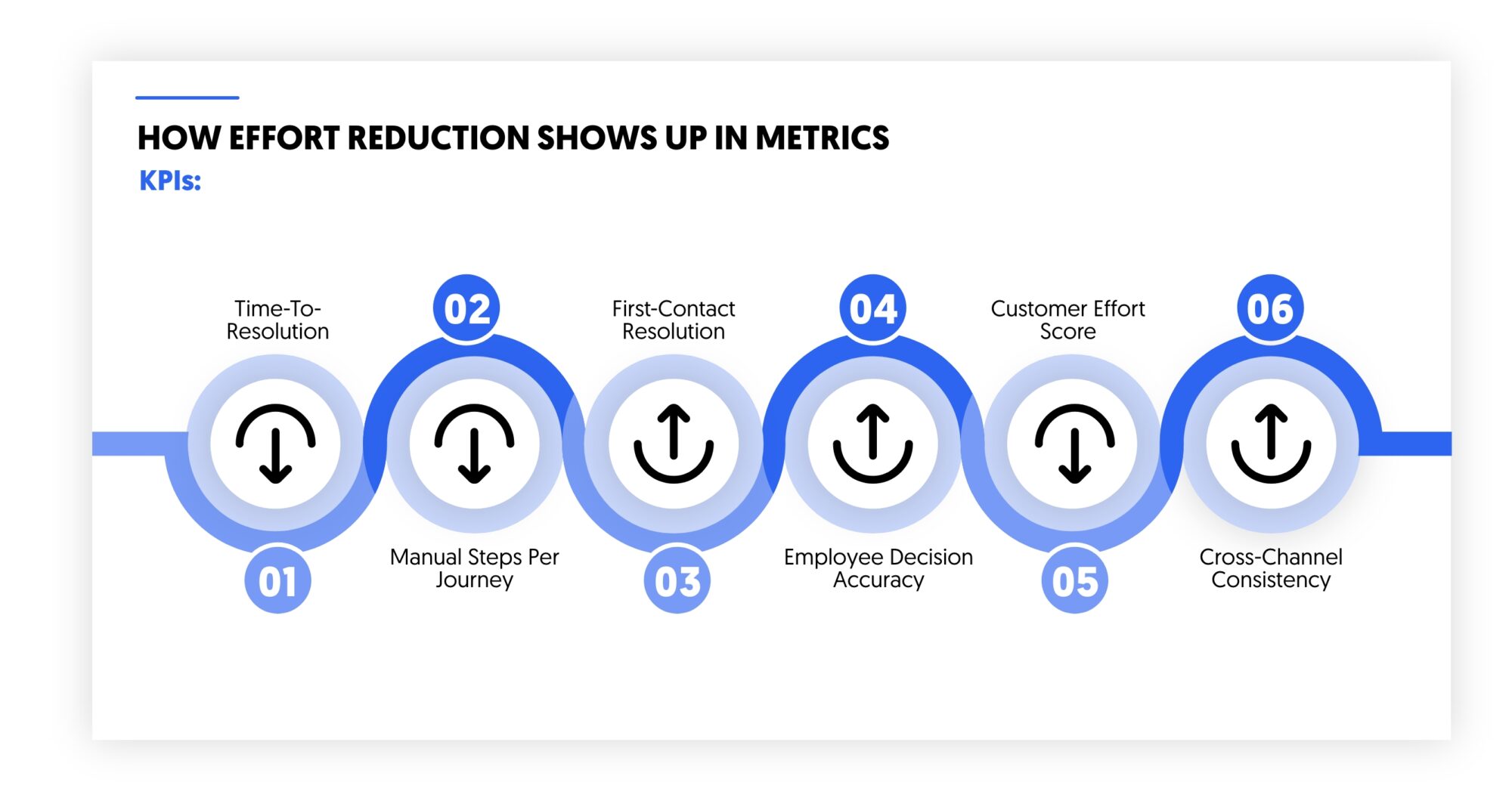
Customers and employees experience value through ease, not complexity. - Shift performance metrics.
Introduce KPIs tied to decision quality, effort reduction, and real-time value delivery.
These steps set the foundation for organizations to evolve from fragmented digital operations to unified intelligence ecosystems.
Why 2026 Belongs to Frictionless Intelligence
The defining story of 2026 is not the rise of new technologies, but the disappearance of old friction. Intelligence becomes a quiet but constant presence informing decisions, simplifying journeys, and amplifying human capability.
Organizations that embrace this shift will deliver experiences that feel natural, intuitive, and effortless. Those that do not will struggle in markets where the standard for value is no longer innovation alone, but the clarity and ease that intelligence provides.
Frictionless intelligence will elevate human insight. And in 2026, that becomes the real competitive advantage.